“In theatres these days, they organize activist events where people can talk about, for example, the ecological catastrophe or the Palestinian genocide. I wish I could somehow understand why there is no room for any of that in musical venues and opera houses, but I guess I simply cannot. Or maybe I don’t want to believe that the people in my field are that clueless.
Ach yes of course, music is the universal language, it’s not political, and what about quality standards, the masterworks, cautious PR, music has no gender or skin color, this is the place where you get to enjoy a break from the world’s turmoil, what’s the big deal with orientalism anyway, why is it that you have to force diversity everywhere nowadays, you know, a big ship turns slowly.
I’m ashamed of how behind the times we are, of our own volition.”
Eriikka Maalismaa’s final public speech at the Wolf Festival, Helsinki, on November 13, 2024
There once was a violinist, ERIIKKA MAALISMAA, who in Finland and beyond was an inspiration to many in defining what musicianship is in the contemporary world. She created a career that felt like a curated whole, through initiatives and collaborations, and also by somehow consistently showing up in places where exciting music was being made. Versatility, independence, craftswomanship, but also character and humor are some of the words that have been used to describe her.
Our paths crossed a few times on stage, but the last occurrence will never stop being memorable to me: four months ago we did this show intertwining Davies’ Eight Songs for a Mad King and Messiaen’s Quartet for the End of Time, and so, as the former work demands, a rather important part of the ending was Eriikka’s violin being taken from her hands and violently smashed to pieces. But in this version, after everyone else had left the stage, Eriikka recovered/resurrected the broken violin to perform Messiaen’s final meditation on Jesus’ immortality, eight minutes of post-apocalyptic luminescence.
It felt like music could redeem something after all, and in that instant she was music incarnate. Theatrics were over, Eriikka stood in the dark and deserted church where this was taking place, and simply made us experience the power and timelessness of a floating, chiseled musical line over the discrete, grounding chords Kirill Kozlovski played on the piano.
This moment of bare artistry, that had the apparent lightness of ease and yet the kind of depth of expression that can only be earned, is the last thing I heard Eriikka play. Hopefully, in the wake of her untimely passing, we will be treated with many recorded memories of her playing, and we should pass them on so everyone knows such a musician has existed. How odd, though, that there will not be more.
Kiitos Eriikka – osanottoni kaikille läheisillesi ja ystävillesi.
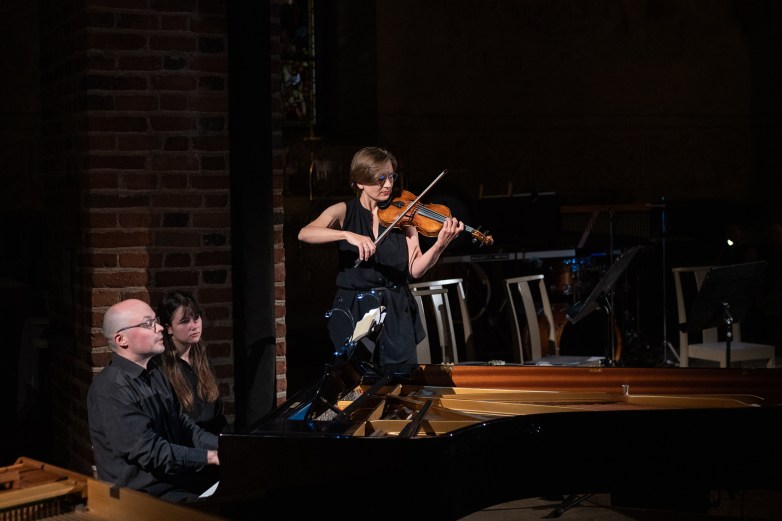
Picture by Jori Grönroos.

 >marginalia*